
BUMBLE BEE BIOLOGY, ECOLOGY, AND CONSERVATION NEEDS
Caleb Bryan, Ph.D.
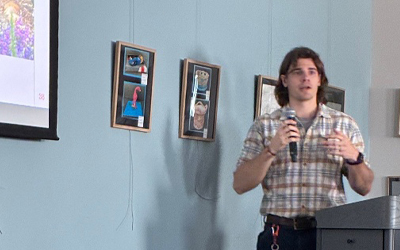
Everything was a “Buzz” last week at the Scranton Memorial Library in Madison. Spring is here! The flowers are starting to bloom. What better time to learn about Bumble Bees? On April 1st, SSILL welcomed Caleb Bryan,Ph.D. to talk about the Bumble Bee.
Caleb is an Agricultural Post Doctorate Research Scientist at the Connecticut Agricultural Experiment Station (CAES). Caleb’s presentation elaborated on the plight of the Bumble Bee, what is happening due to climate change, and the types of plants that the bees enjoy.
Because they are adapted to colder climates, bumblebees struggle with heatwaves. Their nesting sites can overheat, hindering brood development, while their habitable ranges are shrinking, forcing them to move to higher altitudes or latitudes.
Increased drought and heat reduce the quality and availability of nectar and pollen, harming the nutritional health of colonies. Creating “no-mow” areas, using native plants, and avoiding synthetic mulch allows them to nest and feed in developed areas.
One member commented “Learned so much, looking forward to getting his information about plantings.” Another exclaimed, “Excellent! The scientists are fantastic. More like this please.”